
Moving in Circles, Standing at a Threshold
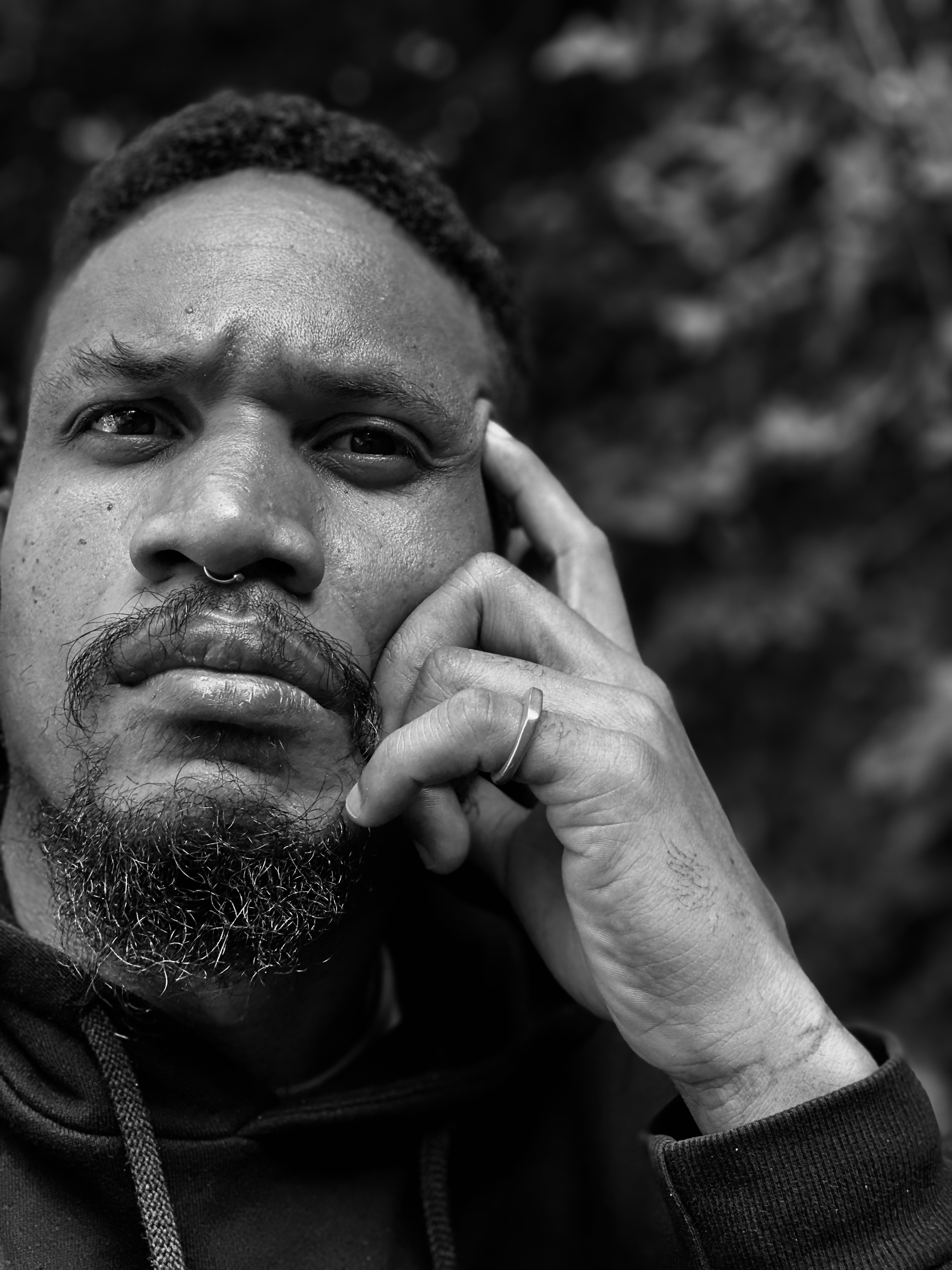
By Rique Mocca Orenia

Reflections on Foundation, Fusion, and the Future of Ugandan Dance
I keep returning to questions of repetition, stagnation, and evolution in dance because I have lived inside these cycles for most of my life.
For years, I have been involved in the Ugandan dance scene—not just as a dancer, but as someone who has watched systems form, repeat themselves, and resist change. I have trained, performed, organised, judged, mentored, and produced work across generations. Over time, patterns began to surface. Not only in movement, but in how dancers learn, how spaces operate, and how progress is defined.
What I see now is a moment of overlap: a new generation of Ugandan dancers blending into an older one, sharing the same floors, the same stages, the same battles—but not necessarily pushing the language forward in the way this moment should allow.
Repetition in the Body, Repetition in the System
Repetition is not the enemy. Dance is built on it. The body learns through doing again and again. But repetition without intention turns into stagnation. Movement continues, but development pauses.
I have felt this personally—times when my body was active, disciplined, busy, yet my thinking had stopped evolving. I was moving faster than I was questioning. That experience made me start paying attention to how often dancers confuse activity with growth.
Across the scene, many dancers are training frequently, consuming content daily, performing often—yet still circling the same patterns. The body accumulates movement, but the mind does not always deepen its understanding of it.
This is not just an individual issue. It is structural.
The Internet Generation: Access Without Depth
There is no denying that this generation has access we did not have. Today, a dancer can watch pioneers, champions, tutorials, and performances from anywhere in the world within seconds. Information is no longer scarce.
But access has changed how learning happens.
“I can watch and do” has become a dominant learning logic. YouTube, Instagram, and short-form content encourage imitation over investigation. Learning becomes fragmented—moves are collected, not studied. The process is fast, chaotic, and rarely guided.
What gets lost in this speed is the most important principle of dance practice:you learn the foundation deeply, and from that foundation, you evolve your own style.
Foundation is not something you rush through. It is something you return to over and over, each time with more awareness.
When “Basic” Becomes a Problem
One of the most damaging shifts I’ve observed is how foundational movements are now treated as “basic”—something you outgrow quickly.
I remember sessions led by Abramz where the entire practice focused on a single step: the Indian step. One step. Repeated ten, twenty, fifty times. Same step, different directions, rhythms, levels, and intentions.
At the time, it didn’t feel revolutionary. Looking back, it was.
Without calling it theory, we were learning structure, spatial awareness, variation, and personal interpretation—inside one foundation. If you paid attention, you left that session with your own top rock style already forming.
Today, many dancers skip this depth. Foundations are touched briefly, then abandoned in favor of fusion.
Fusion Without Roots
Fusion itself is not the problem. Movement evolves. Cultures exchange. Styles influence one another. That is natural and necessary.
The issue is fusion without foundation.
In breaking especially, it is becoming harder to see intricate, grounded breaking vocabulary. What we see instead is movement that blends multiple forms without fully committing to any of them. You can feel the difference immediately between a breaker with a strong foundation and one with a questioning foundation.
It shows in:
timing
transitions
musical response
spatial clarity
A strong foundation gives dancers options. A weak one forces them to rely on surface-level variety.
Fusion, when rooted in deep understanding, becomes identity. Fusion without that grounding becomes confusion.
Teaching What You Haven’t Fully Learned
As spaces evolve—or fail to evolve—the responsibility of teaching foundations increasingly falls to dancers who may not have mastered them themselves.
When someone leads a session on a foundational move without fully understanding its structure, history, and variations, what they pass on is not the foundation—it is their personal interpretation of it. That interpretation then becomes the reference for others.
This is how misrepresentation spreads.
In Uganda, we often learn through second-hand or third-hand information. We don’t always have access to originators. And while evolution is natural, misinformation also evolves—and sometimes becomes normalized.
When originators do appear—like when Crazy Legs visited Uganda—the difference is unmistakable. Learning first-hand carries a weight that digital learning cannot replicate. It clarifies not just how to move, but why the movement exists as it does.
Naming, Ownership, and the Collapse of Meaning
One of the most uncomfortable outcomes of this confusion is the tendency to rename movement without accountability. Watching a dancer break and label it “African Contemporary Dance” has become common.
Sometimes the intention is honest. Sometimes the movement selection feels culturally familiar. But this raises serious questions:
Who is the choreographer?
Who is the dramaturg?
What references are shaping the work?
What knowledge system is being honored?
Without these questions, genres collapse into aesthetics, and naming becomes convenience rather than responsibility.
A Moment of Choice
This moment in Ugandan dance is fragile—but it is also powerful.
For the first time, we have access, visibility, and generational overlap at scale. The question is whether this access will deepen practice or flatten it. Whether repetition will become discipline again—or remain stagnation disguised as productivity.
I write about this because I care. Because dance has given me language, identity, and community. Watching dancers plateau, burn out, or lose curiosity feels personal.
Reflection, for me, is an act of care.
The way forward is not to reject the internet, fusion, or experimentation—but to re-anchor them in foundation, context, and intention. To slow learning down. To respect repetition again. To understand that originality is not created by mixing everything—but by knowing something deeply enough to transform it truthfully.
If we do this work now, the next generation of Ugandan dancers will not just move more or faster.They will move with clarity, lineage, and purpose.
And that is how dance truly evolves.


Comments