


The Awakening of the Manifestation of Hip Hop Kulture in Uganda | By Ricky Mocca Orenia

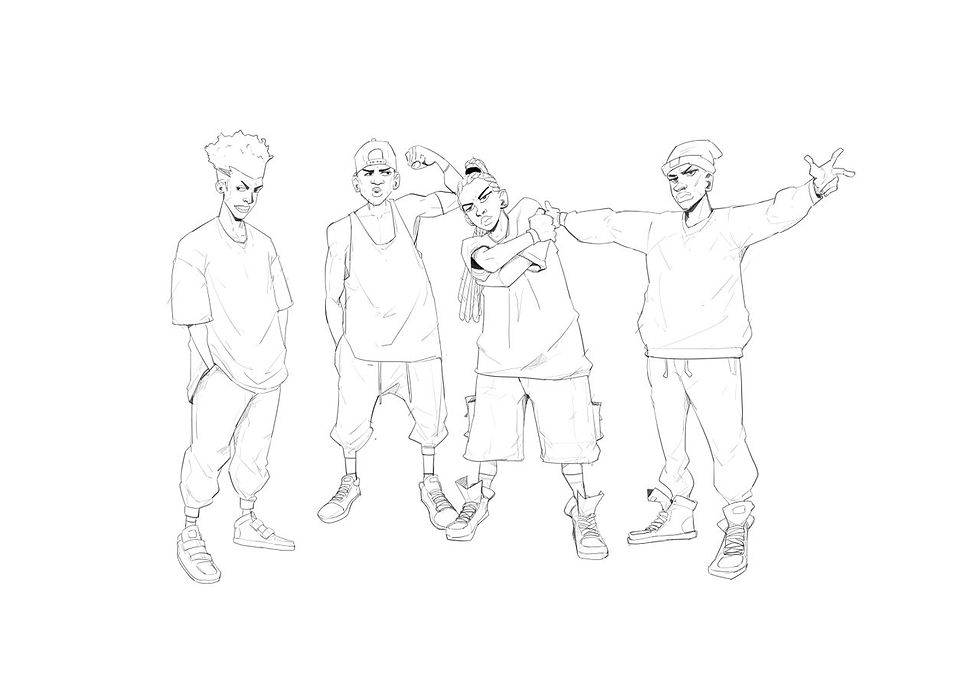
Between 2013 and 2019, a cultural flame was reignited in Uganda—one that had long been simmering in the background of urban life. This was not just about rap music or dance battles; it was about the deeper awakening of Hip Hop as a way of life, a culture rooted in resistance, expression, and unity. In the face of economic limitations, societal indifference, and lack of infrastructure, Hip Hop practitioners—particularly in Kawempe, a Kampala suburb known for its raw artistic energy—rose up with a renewed sense of purpose and cultural clarity.
The Pulse of a New Era
In an age before TikTok trends and algorithm-driven virality, Facebook played a pivotal role in connecting Uganda’s Hip Hop community to a broader global movement. This was the era when young artists across Kawempe and beyond began tapping into the essence of Hip Hop—not just as entertainment, but as an expression of identity, purpose, and resistance. Galaxy Dance Project Uganda became one of the torchbearers of this movement, spearheading street dance as a vehicle for cultural revolution. Even with scarce access to proper rehearsal spaces and little external recognition, the determination was unshakable.
Crews such as Battle Holex Crew, Original Skillz Crew, and The Bronx Boys were central to this reawakening. These were not just collectives of dancers and emcees—they were cultural institutions. Led by figures like SSebbaggala Alex Heskey, Kyasi Bullet Smith, and myself, these crews took on the responsibility of connecting the Ugandan chapters to global movements. We found belonging and solidarity in international affiliations like the Universal Zulu Nation, whose Ugandan representation started gaining serious footing during this time.
The Rise of the Nation
It was around this time that the Universal Zulu Nation in Uganda grew into more than just a symbolic connection—it became a living, breathing community. Early members such as Ras Benard Benzima, Chandia Lucky Sadolin, Nina MC, Taye MC, and Spyda MC began championing the cultural, spiritual, and educational tenets of the Zulu Nation. Their presence brought more structure, direction, and authenticity to the practice of Hip Hop, anchoring it in principles of peace, unity, love, and having fun.
Curiosity among young members surged. The energy in the streets was shifting. People were no longer satisfied with mimicking the art forms—they wanted to understand the roots. They began asking: Where does this come from? What does it mean? What is our place in this global culture? These questions opened doors to a more conscious manifestation of Hip Hop in Uganda, moving beyond the five elements and into lifestyle, philosophy, and community.
Ghetto to Ghetto: A Revolutionary Link
A major catalyst in this cultural manifestation was the reintroduction of the Bavubuka Dynasty and Nation through the Ghetto to Ghetto Cyphers, led by the visionary duo Tandika Essawa. This moment marked a turning point in local Hip Hop consciousness. The arrival and consistent leadership of Grandmaster Babaluku , a foundational figure in Uganda’s conscious Hip Hop movement, reshaped the narrative entirely.
Babaluku brought a message of indigenous knowledge, linguistic pride, and ancestral grounding—a spiritual awakening that merged traditional African values with Hip Hop’s revolutionary edge. His work redefined what it meant to be a Hip Hop practitioner in Uganda: not just a performer, but a custodian of history, community, and resistance.
A Cultural Convergence
What followed was a period of unprecedented unity. Breakers, emcees, writers, beatboxers, DJs, and teachers came together not just for battles or events, but to build a community. Events like Back-to-school jams and GDPU anniversaries became historical milestones rather than fleeting spectacles. They were moments of gathering, learning, and honoring the journey of Hip Hop in Uganda.
Workshops were held under trees. Sound systems were set up on dusty streets. Beats were looped on laptops held together by duct tape. Yet what mattered most was the shared purpose—the desire to build something real, something rooted, something revolutionary.
This era laid the foundation for the cultural institutions we see today—festivals, educational programs, dance academies, and networks that trace their lineage to that period of awakening.
The Legacy Continues
Looking back, the years 2013-2019 were not just a phase—they were a cultural awakening. They were the years where Hip Hop in Uganda became visible, intentional, and united. They taught us that you don’t need perfect conditions to spark a revolution. You just need vision, purpose, and community.
Today, as we watch new generations take the mic, hit the floor, tag the walls, and educate the youth, we do so know that we are part of something bigger. Something timeless. Something that, despite the odds, manifested fully in the hearts and streets of Uganda.
And that manifestation?
It was never about fitting into the world.
It was about reshaping the world to reflect who we are.
Peace, unity, love, and having fun—manifested through the streets of Kawempe and far beyond.


It's really amazing to see people coming together, sharing their passion, and celebrating self-expression. This reawakening is a reminder that hip hop is more than just a genre but also a culture that empowers, inspires, and brings people together. Let's keep nurturing this movement and providing opportunities for creatives to thrive!"